
In Part 3, we laid out a new model for biorefining - one that prioritises value over volume by fractionating biomass and preserving its core components: cellulose, hemicellulose, and lignin.
Unlocking these fractions is just the beginning. The real challenge (and opportunity) lies in upgrading them into materials the world can actually use.
From biomass to better materials
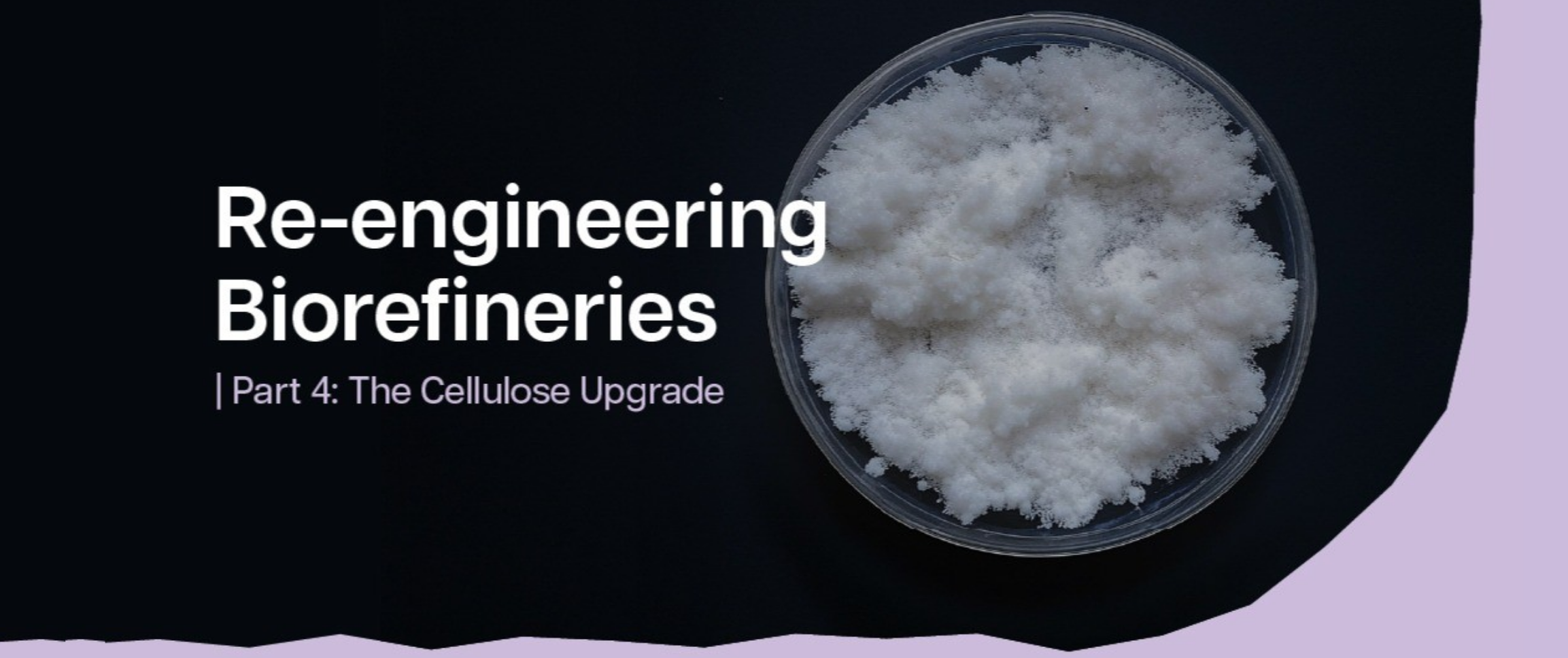
Cellulose, the structural backbone of biomass, is widely found in nature as an organic polymer.
At altM, we upgrade cellulose through a process called etherification. In simple terms, we modify the hydroxyl (-OH) groups on the cellulose chain using carefully selected alkylating agents to create functional cellulose ethers.
These essential workhorse materials, now derived from agri-residue are used across industries as rheology modifiers, thickening agents and viscosity modulators, such as:
- Methylcellulose in construction and food products,
- Hydroxypropyl cellulose in pharma and personal care,
- Hydroxypropyl methyl cellulose in everything from coatings to cosmetics.
These materials stabilize, thicken, film-form, and suspend chemical formulations of all kinds. They are the invisible ingredients that make modern formulations possible.
The altM difference: EO-free and future-ready
We’ve synthesised non-EO (i.e., ethylene oxide-free) cellulose ethers that are designed for the next generation of clean-label, regulation-ready formulations.
As industries move away from EO-based chemistries due to tightening safety and environmental standards, this unlocks a massive opportunity for safer, scalable, and high-performance cellulose ether solutions.
Process to precision: How we upgrade cellulose
Upgrading cellulose into high-performance ethers isn’t just about the chemistry; it’s about engineering every part of the process. Here’s how we do it:
Precision: We use precision dosing systems to control the input of alkylating agents, ensuring their use in minimal quantities and achieving consistent substitution across the cellulose chain.
Accessibility: Through solvent swelling and mild activation, we increase the accessibility of reactive sites without compromising structure.
Integrity: To retain molecular weight and mechanical strength, we deploy protective agents that preserve polymer integrity during etherification.
Sustainability: Our process integrates closed-loop solvent recovery and advanced effluent treatment, operating at lower energy inputs to drastically reduce environmental impact.
This is the future of biorefineries: Not just breaking things down, but building sustainable future-ready materials.
With altMorph, we’re redefining what biomass can become.